Contents · 5 sections
In the far north of Alsace, right up against the German border, Wissembourg lines its half-timbered houses along the Lauter around a vast Gothic abbey church. A small town with a rich past and a gateway to the Northern Vosges Regional Nature Park.
At a glance
- Location
- Wissembourg
Where to stay in Wissembourg
Compare hotels for your dates before they fill up.
View on ExpediaPartner links.
Wissembourg at a glance
- Location: Bas-Rhin, on the Lauter, on the border with the German Palatinate, about sixty kilometres north of Strasbourg.
- Population: around 7,500 inhabitants.
- Getting there: direct TER train from Strasbourg (about 1 hour); the town is easy to explore on foot.
A history that grew up around an abbey
Wissembourg grew out of a Benedictine abbey founded around 660 on an island in the Lauter. Powerful in the Middle Ages, the abbey fostered a town around it that became an imperial city and a member of the Decapolis, the alliance of the ten imperial cities of Alsace created in 1354. Joined to France under Louis XIV, the town has kept much of its heritage despite fires and wars.
From 1719 to 1725, Wissembourg was home in exile to the former King of Poland, Stanisław Leszczyński, and his family. It was here that his daughter Marie learned she was to marry King Louis XV. Finally, on 4 August 1870, the town was the scene of the Battle of Wissembourg, the first battle of the Franco-Prussian War on Alsatian soil.
Book an activity in Wissembourg
All activities via GetYourGuideGuided tours in WissembourgPrices and dates on the partner siteBook
 via GetYourGuideDay trips from WissembourgPrices and dates on the partner siteBook
Partner links: if you book through these links, Alsace Voyage earns a commission at no extra cost to you.
What to see in Wissembourg
The abbey church of Saints-Pierre-et-Paul
Built in the 13th and 14th centuries on the site of a Romanesque church whose bell tower still stands, the abbey church is considered the largest religious building in Alsace after Strasbourg cathedral. Inside, don’t miss the gigantic mural of Saint Christopher on the north wall and the stained-glass windows, and outside, the remains of the cloister.
The Maison du Sel
Recognisable by its imposing roof, the Maison du Sel (Salt House), built in 1448, was the town’s first hospital. On the banks of the Lauter, it is one of the most photographed façades in Wissembourg.
The Bruch quarter and the banks of the Lauter
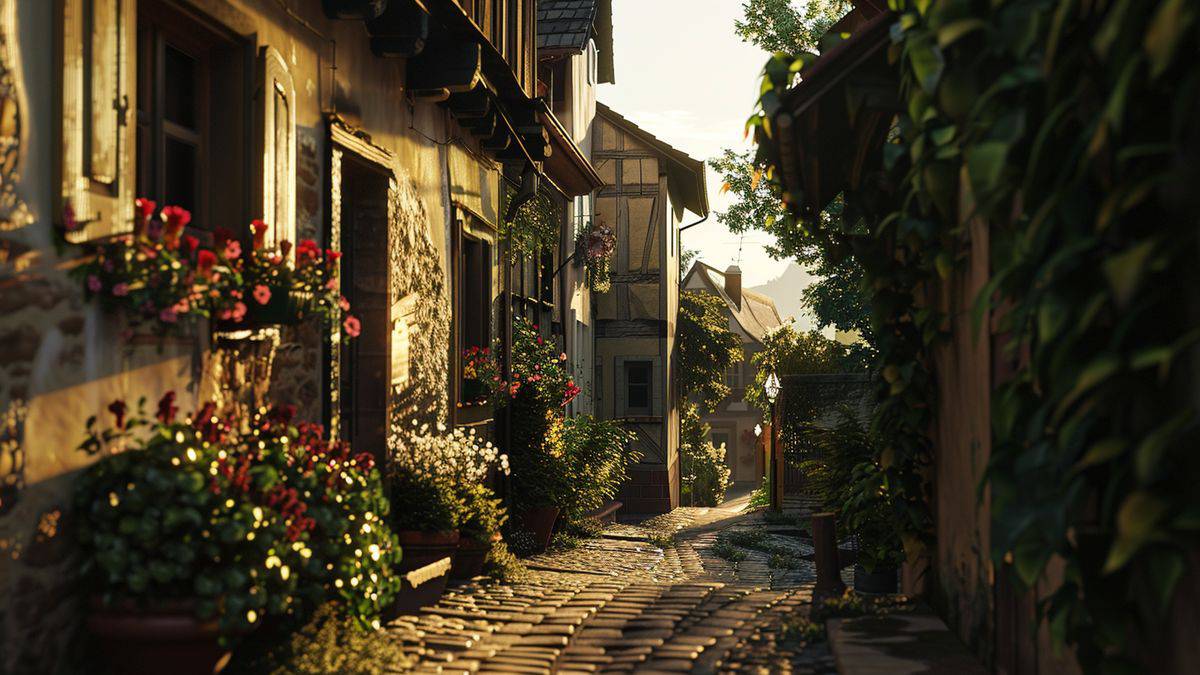
Once marshland and now a residential area, the Bruch quarter lines its half-timbered houses along the Lauter and its little bridges. Look out for the so-called “Ami Fritz” house, built around 1550, which owes its nickname to the filming of a movie based on the novel by Erckmann-Chatrian (private property, visible from the outside).
The town hall and Stanislas’s house
On the main square, the town hall was rebuilt between 1741 and 1752, after the fire of 1677, in an elegant classical style. Nearby, Stanislas’s house recalls the exiled King of Poland’s stay in the town.
The ramparts walk
The old ramparts have been turned into a shady promenade. An easy loop of about 3.6 km (1 hour) takes you all the way round, past the Powder Tower (tour de la Poudrière), with lovely views over the rooftops and the abbey church.
The Geisberg
South of the town, the Geisberg hill offers a fine panorama and is home to several French and German monuments in memory of the soldiers who fell in the battle of 1870.
 Read nextVisiting Oberlauterbach – Tourism in Alsace
What to do around Wissembourg

- The German Wine Gate: just across the border, in Schweigen-Rechtenbach, the Deutsches Weintor marks the start of the Palatinate Wine Route.
- Hunspach and Seebach: about ten kilometres to the south, two villages with the white half-timbered houses typical of the Outre-Forêt; Hunspach is listed among the Most Beautiful Villages of France.
- The Maginot Line: the Schoenenbourg fort, near Hunspach, is open to visitors.
- The castles of the Northern Vosges: Fleckenstein, a semi-troglodyte castle near Lembach, is served by a Regional Nature Park shuttle bus from Wissembourg station on Sundays and public holidays from April to October.
- The wines of Cleebourg: the northernmost vineyards in Alsace, a few kilometres from Wissembourg.
When to visit Wissembourg?
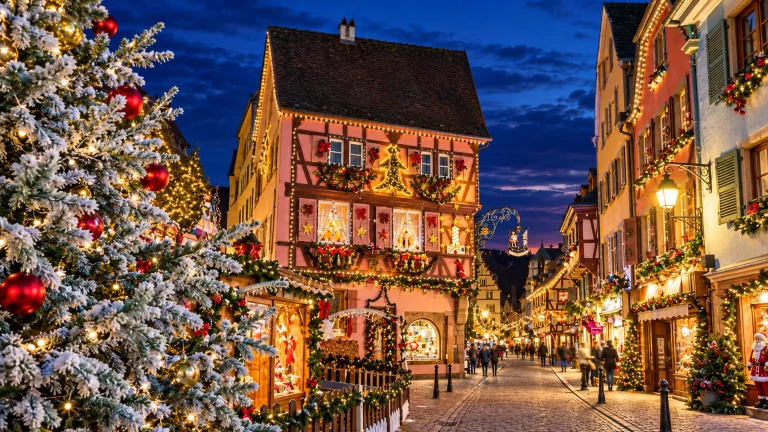
Spring and summer are perfect for enjoying the flower-lined banks of the Lauter and hiking in the nearby forests; autumn brings colour to the Northern Vosges and the vineyards; in December, the town gets into the Christmas spirit. To plan your stay, also browse our ideas for sights and activities in Alsace.
A monumental abbey church, half-timbered houses, ramparts and forests close at hand: Wissembourg is well worth a full day and makes an excellent base for exploring northern Alsace.
Enzo
Hi, I'm Enzo! I'm the guy who loves lacing up his hiking boots to explore the rugged trails of the Vosges. Passionate about nature and photography, I take you along through articles that capture the scent of fir forests and the charm of mountain lakes. I live for those moments when the sun rises over the Haut-Koenigsbourg or when I stumble upon an authentic inn along the way. My goal? To inspire you to get out, breathe in the fresh Alsatian air, and always have a great spot for a tarte flambée to share at the end of the day.
 Towns and VillagesVisiting Oberschaeffolsheim (67) – Tourism in Alsace