Heritage and Traditions of Alsace
Alsace changed nationality four times between 1871 and 1945, and its heritage bears the marks. Here you'll find the monuments, memorial sites, traditions and the Alsatian language, along with the keys to visiting and understanding them.

The essentials not to be missed
Our editors’ picks, to start with the best.


Heritage and Traditions of Alsace through the seasons
What awaits you in each season, and how many entries we recommend.




Heritage and Traditions of Alsace: Monuments, Memory, Customs
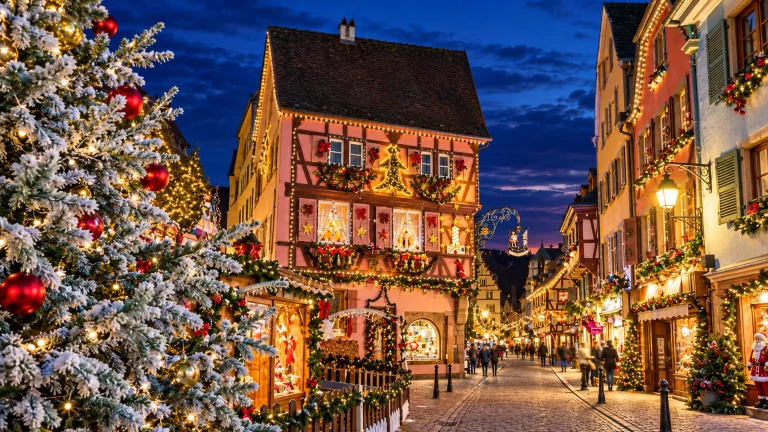
Alsatian heritage blends Rhineland and French influences. Strasbourg offers a summary of both: the Gothic cathedral, the 18th-century Palais Rohan, and the Neustadt, built under German administration between 1871 and 1918 and listed as a World Heritage site along with the Grande-Île. In the villages, half-timbered houses, the churches of the Romanesque route and the ramparts tell the local story.
Several memorial sites recall the wars of the 20th century. The Struthof, on Mont Louise near Natzwiller, is the only concentration camp built by the Nazis on French soil; it operated from May 1941 to September 1944 and is home to the European Center of Deported Resistance Members. The Mémorial de l'Alsace-Moselle in Schirmeck and the MM Park in La Wantzenau round out a visit.
Traditions remain alive. Saint Nicholas Day, on December 6, comes with the mannele (a brioche man); Advent with bredele (Christmas cookies) and Christmas markets; Easter with the lammele (lamb-shaped cake). The costume with the large bow is worn at folk festivals. It was also in Strasbourg, in 1792, that the future “Marseillaise,” composed by Rouget de Lisle, was sung for the first time. The Alsatian dialect, part of the Germanic family of languages, is still spoken, mostly in villages and by older people.
A few tips: the European Heritage Days, in September, open many sites that are usually closed. In churches, avoid service times. In Strasbourg, a guided tour of the Neustadt or the cathedral offers insights you wouldn't get on your own.
Frequently asked questions
Why does Alsace have a dual French and German culture?
Gradually attached to the Kingdom of France starting in 1648, Alsace was annexed by the German Empire from 1871 to 1918, then by Nazi Germany from 1940 until the Liberation. These changes left their mark on its language, architecture and local law.
What is the Struthof?
The former Natzweiler-Struthof concentration camp, on Mont Louise near Natzwiller, the only concentration camp built by the Nazis on French soil. It operated from 1941 to 1944 and is home to the European Center of Deported Resistance Members.
Is Alsatian still spoken?
Yes, but less and less, mostly in villages and by older people. The Alsatian dialect belongs to the Germanic family of languages; everyone speaks French.
What are the main Alsatian traditions?
Saint Nicholas Day on December 6, Advent and the Christmas markets, Easter and its lammele, village festivals and the traditional costume with the large bow, worn at folk festivals.