
Contents · 5 sections
Alsace is home to one of France’s most celebrated wine routes: 170 kilometres of vineyards, half-timbered villages and family-run cellars, stretching from Marlenheim in the north to Thann in the south. Every season shows the route in a different light, but it is between September and October, during the grape harvest, that the region is at its very best.
A route through vineyards and picturesque villages
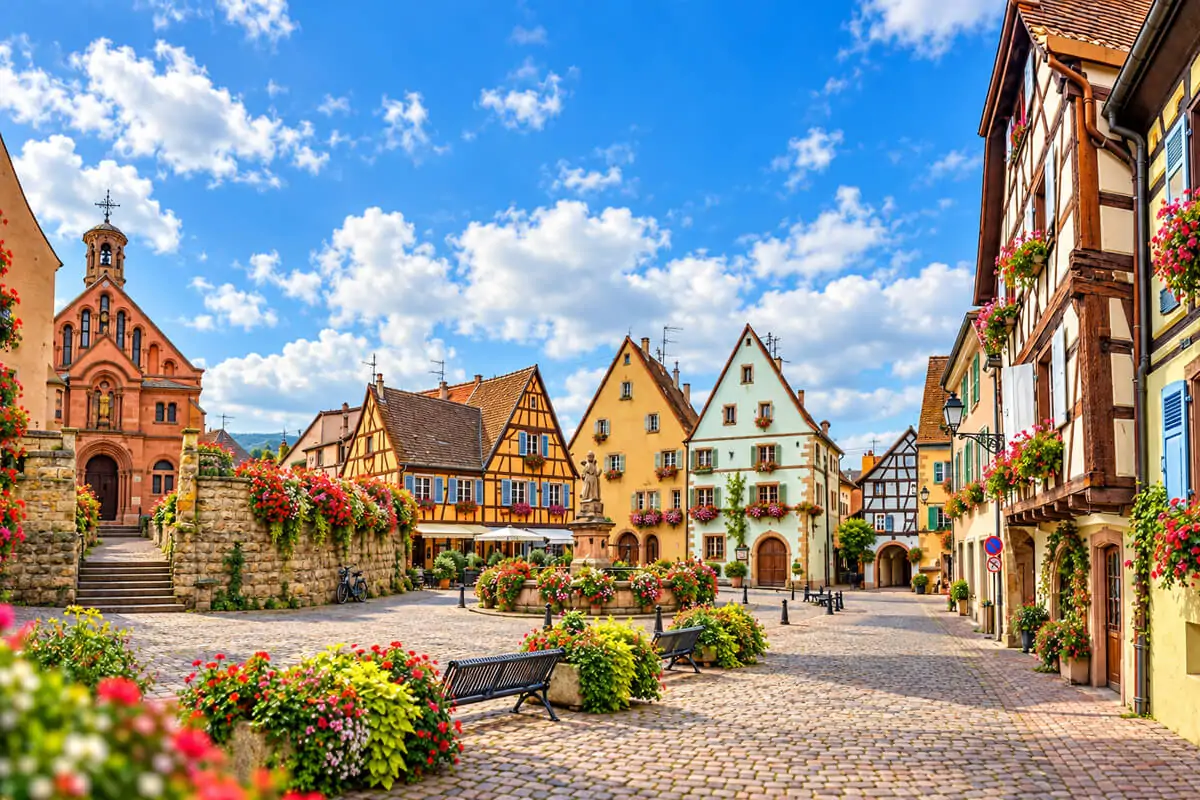
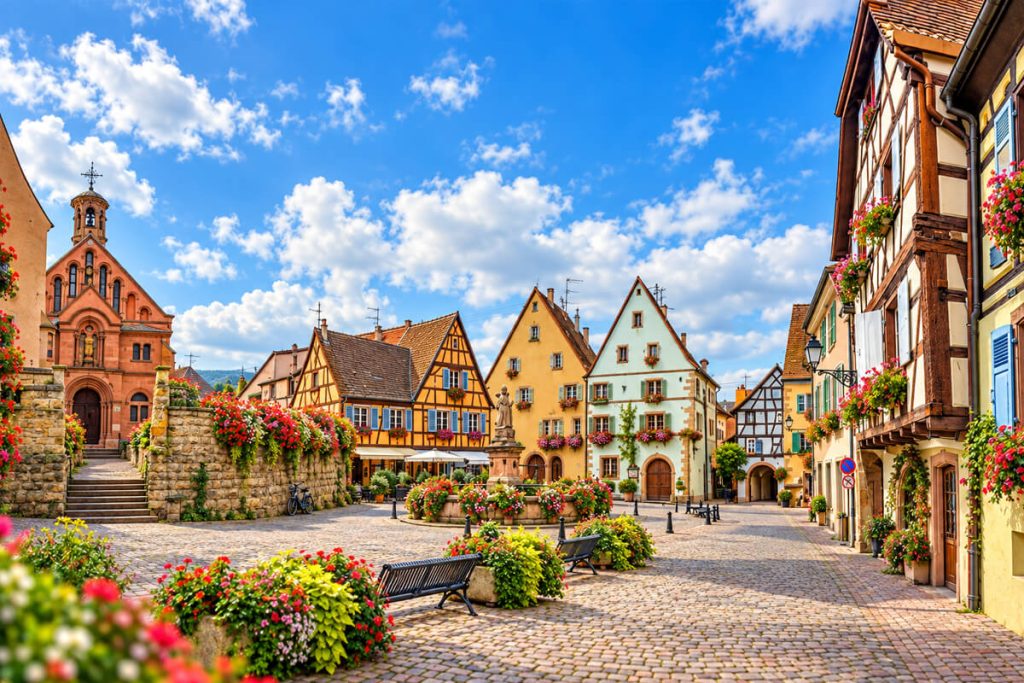
The Alsace Wine Route runs through some sixty villages, several of which rank among the most beautiful in France: Riquewihr, Eguisheim, Ribeauvillé and Kaysersberg, to name but a few. Half-timbered houses, medieval ramparts and flower-filled lanes make up a backdrop that changes at every bend. Between stops, vine-covered slopes stretch as far as the eye can see, dotted with castles and isolated chapels.
Book an activity in Alsace
All activities via GetYourGuideGuided tours in AlsacePrices and dates on the partner siteBook
 via GetYourGuideDay trips from StrasbourgPrices and dates on the partner siteBook
Partner links: if you book through these links, Alsace Voyage earns a commission at no extra cost to you.
Seven grape varieties, a rare diversity
Alsace grows seven main grape varieties: Riesling, Gewurztraminer, Pinot Gris, Pinot Blanc, Muscat, Sylvaner and Pinot Noir. Most estates offer a free or modestly priced tasting, a chance to chat directly with the winemakers about their terroir and their winemaking methods, often handed down over several generations. Alsace’s 51 grands crus are particularly concentrated around Colmar and Ribeauvillé.
Planning your visit
The route can be explored by car, or by bike for the shorter sections. For groups, or for visitors who would rather enjoy the tastings without worrying about driving, hiring a private driver for a day on the wine route makes it easy to visit several estates in a single day, with an itinerary tailored to the cellars’ opening hours and the group’s wishes.
It is best to plan your visit on a weekday outside the summer season to avoid the crowds, and to book the most popular estates in advance, especially in September and October.
Where to stop first
Three unmissable stops: Eguisheim, for its circular village listed among the most beautiful in France; Riquewihr, for its architecture, untouched since the 16th century; and Colmar, for its Little Venice and covered market. Between these towns, plenty of small family estates are well worth a detour, and they are often more open to in-depth conversation than a large wine house.
In a nutshell
The Alsace Wine Route combines architectural heritage, vineyard landscapes and a way of life built around wine. One or two days are enough for a first taste, but wine and walking enthusiasts could easily spend a whole week here, alternating cellar visits, strolls through the vineyards and gourmet stops in the local winstubs.

Enzo
Hi, I'm Enzo! I'm the guy who loves lacing up his hiking boots to explore the rugged trails of the Vosges. Passionate about nature and photography, I take you along through articles that capture the scent of fir forests and the charm of mountain lakes. I live for those moments when the sun rises over the Haut-Koenigsbourg or when I stumble upon an authentic inn along the way. My goal? To inspire you to get out, breathe in the fresh Alsatian air, and always have a great spot for a tarte flambée to share at the end of the day.