Contents · 8 sections
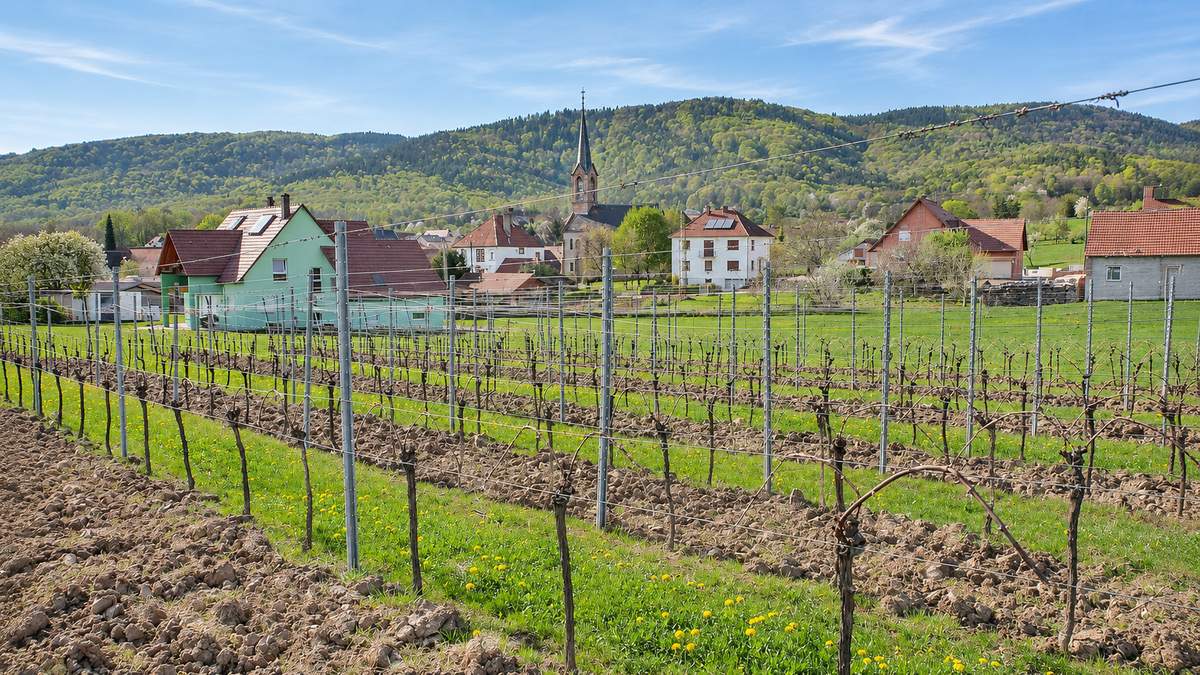
The northern Alsace Wine Route starts in Marlenheim, about twenty kilometres west of Strasbourg, and heads south to Obernai, Mittelbergheim and Barr; further north still, near Wissembourg, the small Cleebourg vineyard forms an enclave of its own. Here are five stops to discover the vineyards of the Bas-Rhin in one or two days.
We chose them from north to south, for their wine interest (grands crus, a cooperative, award-winning villages) and because they are easy to combine by car or by bike. Opened in 1953, the Wine Route runs for 170 km from Marlenheim to Thann: every stop is covered in our guide to the Alsace Wine Route.
- Time needed
- one to two days
Checked on November 17, 2026
Compare hotels for your dates before they fill up.
View on ExpediaPartner links.
The Cleebourg vineyard, in Northern Alsace
At the far north, on the border with the Palatinate and a stone’s throw from Wissembourg, the Cleebourg vineyard is the northernmost in Alsace. It covers the land of Cleebourg, Oberhoffen-lès-Wissembourg, Rott and Steinseltz. Its winegrowers belong to a cooperative that makes and sells the wines.
This stop stands apart, far from the rest of the route: allow half a day to visit Cleebourg and enjoy a tasting. It pairs well with Wissembourg and the Outre-Forêt area.
Marlenheim, northern gateway to the Wine Route
Marlenheim marks the northern end of the Wine Route proper: one of the two convoys of the inaugural rally set off from here on 30 May 1953. The village has an Alsace grand cru, the Steinklotz.
Allow one to two hours for the village and a tasting at a winegrower’s. From there, the road heads south along the foot of the Vosges. More information on our page Visiting Marlenheim.
 via GetYourGuideGuided tours in AlsacePrices and dates on the partner siteBook
 via GetYourGuideDay trips from StrasbourgPrices and dates on the partner siteBook
Partner links: if you book through these links, Alsace Voyage earns a commission at no extra cost to you.
Obernai, at the foot of Mont Sainte-Odile
Obernai is one of the “Plus beaux détours de France” (France’s most beautiful detours). Surrounded by vines at the foot of Mont Sainte-Odile, the town is ideal for a half-day stop: old town centre and paths through the vineyards.
It makes a good base for exploring the north of the wine region. All the details on our page Visiting Obernai.
 Read nextDiscover the best wines of Alsace on a road trip along the Wine Route!
Mittelbergheim, between Obernai and Barr
Listed among the Most Beautiful Villages of France, Mittelbergheim is a winegrowing village where more than half of the land is covered with vines. Its grand cru, the Zotzenberg, is one of the best known in the Bas-Rhin.
Allow one to two hours to stroll and taste. The village is also on the Alsace vineyard cycle route. See our page Visiting Mittelbergheim.
Barr, gateway to the heart of the Wine Route
Barr opens the stretch of vineyards from Barr to Rouffach, home to the most typical wine villages in Alsace. It is the last northern stop before the big villages of the Haut-Rhin.
Allow one to two hours. From here, the road continues to Dambach-la-Ville, Ribeauvillé and Riquewihr.
How to combine them
In one day from Strasbourg: Marlenheim in the morning, lunch in Obernai, then Mittelbergheim and Barr in the afternoon. The Cleebourg vineyard, set apart to the north, needs an extra half day, best combined with Wissembourg.
By bike, the Alsace vineyard cycle route, opened in 2014 and part of EuroVelo 5, runs alongside the Wine Route. For more ideas, see our Alsace vineyards.
Frequently asked questions
Where does the Alsace Wine Route start?
In Marlenheim, west of Strasbourg, for the main route, which runs for 170 km to Thann. The Cleebourg vineyard, near Wissembourg, lies even further north.
What is the northernmost vineyard in Alsace?
The Cleebourg vineyard, which brings together Cleebourg, Oberhoffen-lès-Wissembourg, Rott and Steinseltz, near the border with the Palatinate.
Which grands crus can you see on the northern Wine Route?
The Steinklotz in Marlenheim and the Zotzenberg in Mittelbergheim, two of the 51 Alsace grands crus.
Can you do the Alsace Wine Route by bike?
Yes, the Alsace vineyard cycle route, opened in 2014 and part of EuroVelo 5, runs alongside the Wine Route.
How old is the Alsace Wine Route?
It was inaugurated on 30 May 1953 with a rally: one convoy set off from Marlenheim, the other from Thann.
Good to know
The Alsace Wine Route has 51 grands crus and has held the Vignobles & Découvertes label since 2019. The Alsace vineyards mainly produce white wines, from grape varieties such as Riesling, Sylvaner, Pinot Blanc, Pinot Gris, Muscat and Gewurztraminer, with Pinot Noir for reds and rosés. For tastings, plan for a driver who doesn’t drink, or spit.
Hello ! My name is Émilie, and I have a soft spot for stories that inspire dreams. From the legends of medieval castles to the mysteries of Alsatian forests and the tales of Great History, I take you on a journey through time. Passionate about writing and discovery, I spend my days exploring archives, listening to locals, and weaving this richness into my articles. I especially love writing about places where reality and imagination intertwine, like Mont Sainte-Odile or Christmas tales. So, are you ready for an extraordinary adventure ?
 Wine RouteLa Route des Vins d’Alsace : between vineyards and picturesque villages
 Wine RouteThe Route des Vins d’Alsace: A Gourmet Itinerary Not to Be Missed